

Americans continue to normalize the agent of the United States' downfall
Regardless of what the outcomes of the American midterm elections turn out to be, and regardless of what kind of chaos it is that inevitably emerges, one thing that Americans can be counted on to do is to sit back and amuse themselves while normalizing their deteriorating democracy
Are you not entertained?
Toute nation a le gouvernement qu'elle mérite.
So said the French philosopher Joseph de Maistre in an 1811 letter, the phrase translating to "every nation gets the government it deserves".
It's a rather apropos statement at the moment, the CBC host David Cochrane having possibly (and inadvertently) updated the phrase earlier this year to directly reflect the current situation in the United States when he said that "America isn't the way it is because he's president. He's president because America is the way it is." The "he" that Cochrane was referring to was, of course, no less than Donald Trump, the wrecking ball that the United States – New York City, to be exact – has unleashed not only upon itself but upon the rest of the world as well.
While the symptom that Trump is would have a hard time emerging from a country with a healthy political system, by giving Americans a permission structure to be their worst selves he's in turn become the cause for the veritable hell-hole that the United States is undeniably turning into. In all fairness, there certainly are those that have managed to avoid succumbing to imitating every behaviour and action that Trump partakes in, while also refusing to follow through with his "suggestions" (à la stochastic terrorism). However, the fact remains that the steady stream of outlandishness – in which the previous day's outlandishness is rapidly pushed out of the news cycle by the current day's outlandishness – has effectively been normalized with dismissive "well that's just Trump being Trump" type of attitudes, even after the extremeness and erratic nature of it all continuously ratchets up as time goes on.
It was no exaggeration to state in FF2F's previous piece that, due to Americans' steadfast adherence to what they seem to believe is "their constitutional right to free speech listen to entertaining jokes made by their late-night court jesters", the reality of the overarching attitude Americans have embodied when discovering that their country has come under threat by authoritarianism is "You can take away our democracy, but don't you dare touch our entertainment!"
Satire and dark/gallows humour can certainly have their place (to allow people to let off some steam, at the very least), but when the messenger needn't be worried about being shot because they're instead lauded by the masses for what is essentially self-deprecating opportunism, then a society's priorities are long overdue for some serious examination.
The examples are virtually endless when it comes to American entertainers and late-night comedians pacifying the public while opportunistically in pursuit of clicks and advertising dollars, a recent fitting example being late-night comedian Jimmy Fallon cracking jokes about Trump's increasing preponderance to slur his words.
Jimmy breaks down the 10th week of Trump’s war in Iran. #FallonTonight
The laughs come in hard, but what's simultaneously brushed away are the extremely serious cognitive issues – and by extension the underlying factors leading to loss of inhibition – that such occurrences are more than hinting at.
Much of the American (mainstream) media doesn't seem to be doing much of a better job when it comes to avoiding the trappings of normalizing Trump's "quirks", former CIA analyst Melvin Goodman stating in CounterPunch that "the mainstream media, particularly the New York Times and the Washington Post continue to normalize Donald Trump by applying everyday terms to his personality and his presidency". That would include terms such as "isolationist", "neo-isolationist" and "imperialist", all of which give the air of traditional policy stances to Trump's political undertakings.
While the fecklessness of the American populace generally gets addressed even less than the normalization of Trump undertaken by (to use Goodman's term) the American mainstream media, Goodman does seem to be one of the few people pointing out at least some of the shortcomings of at least one of those two segments. For as he further describes the situation involving the American mainstream media, "these descriptions normalize the Trump presidency and avoid the rages that are unique to Donald Trump", adding that "[the] two terms that make the Trump presidency unique in American history are 'megalomania' and 'pathological narcissism.'"
The gravity behind Goodman's description of Trump – rather than the kid gloves that much of American mainstream media generally treats the president of the United States with – is certainly warranted, even though one might take issue with the exactitude of the "two terms" that Goodman places Trump's dysfunctions and overall condition into. Because although there have been (American) experts in fields such as psychology, psychiatry and neurology that, for a decade now, have been ringing alarm bells and highlighting what the presidency of Trump would inevitably impose – and has been imposing – upon various parts of the country – its social cohesion, its adherence to the rule of law (which wasn't exactly a shining light prior to Trump), its democracy, etc. – as well as upon the rest of the world, there's all the while been ostensibly well-meaning individuals and associations going out of their way to silence the kind of diagnoses that could go a long way in assisting people with psychologically understanding Trump and in turn opening up the possibility that he be properly assessed and dealt with.
It stands to reason then that, without those proper understandings, and without some kind of concerted recourse (be it a general strike as previously mentioned, or a medical intervention that under almost any other circumstance would have already been undertaken in order to deal with such an individual), it seems to be all but inevitable that the United States will continue having a hard time – if not an impossible time – avoiding its continuous fall down the spiralling path of chaos and destruction, dragging down not just itself but the rest of the world down with it.
Choose your own Trumpian adventure
And that's where the world now finds itself, those unable to avert their gaze from the civilizational car crash left to wonder what's in store for the world come the United States' midterm elections, elections that – supposing everything is followed through above board – all indicators are suggesting will deliver a resounding defeat upon the Republicans (who are surely to lose the House of Representatives, and possibly the Senate as well). Taking into consideration the best case scenario of completely free and fair elections, might a Trump/Republican loss engender a reversal to the spiralling path of chaos and destruction festering in the US and beyond? Well, lullabies certainly can be soothing.
Lullabies are for somnambulists
If we're to listen, for example, to lullabies from the likes of Michael Lynn in The Telegraph (Lynn being a British financial journalist who seemingly adheres to the American mainstream media normalization of Trump by way of seeing this unfolding process through a lens of traditional political machinations), "Trump the lame duck would be a relief for the world". That is, Trump's likely to be bogged down with impeachment "as soon as his political opponents take control of Congress", and will otherwise be "tied up fighting off legal challenges". We have, however, seen this story before.
Likewise, other pundits speak of Trump having opened the door for a possible loss, Trump himself having stated in late-October that "The president always loses, for whatever reason, midterms. Whoever it is. Republican, Democrat. Great president, lousy president." Could Trump be turning a new leaf in life, in his late age finally coming to acknowledge that he can in fact lose an election, in turn humbly handing over the reins of power to Democrats in both chambers as he rides off quietly into the sunset?
To be sure, pigs don't fly, and nor does Trump possess the psyche to accept a loss without in one way or another twisting events in order to suit the authoritarian outcomes he's after. One would have to be naïve to the highest degree to think that Trump and his cronies went to so much trouble and went to so many lengths to try to take power, only to then peacefully accept the results. That being so, the only question that can remain is: How exactly will events be twisted in order to achieve the desired outcomes?
It's this question that various lawyers, policy experts and others have wargamed in order to get ahead of the chaos, the American Civil Liberties Union having coming up with a list of 25 possible scenarios in which the midterms could be tampered with and what kind of responses they might undertake to counter with.
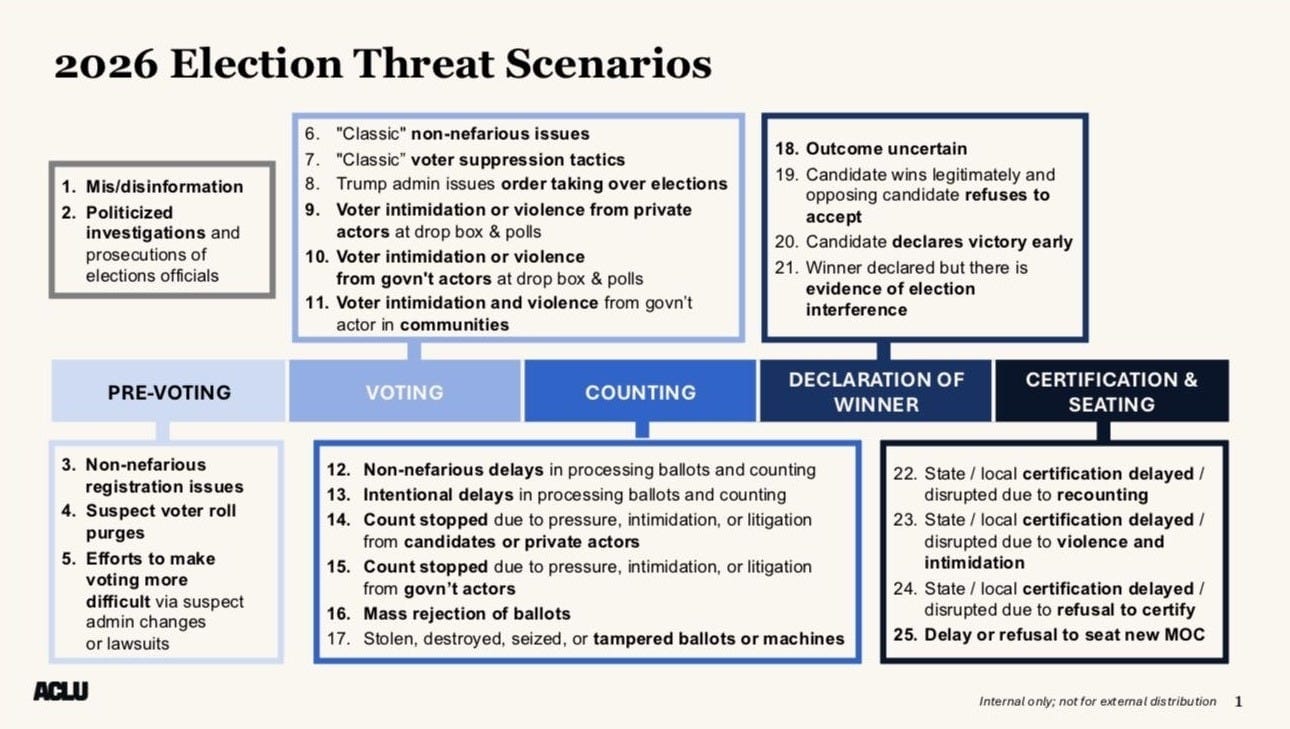
To be sure, the idea of Trump and his cronies has never been so crude as to outright cancel the elections (least of all because it's the states that run elections), but rather to manipulate the elections, as has in recent times occurred in places like Viktor Orban's Hungary. Many people have bemoaned so-called "fearmongering" about various possible scenarios, some scenarios admittedly more outlandish than others (such as that of Speaker Mike Johnson firing the current clerk of the House and replacing him with a loyalist who would exclude some Democratic members-elect from the roll, theoretically allowing for Republicans to then move to hold a speaker vote and try and maintain their majority without the seated Democrats), but after the attack on the Capitol nearly six years ago it'd be foolish to throw caution to the wind, implying that almost no theory can be dismissed as out of hand. Which, with the current state of the US being as it is, can be exhausting due to the sheer volume of "flooding the zone with shit" that's been undertaken in order to see what sticks and manages to get past the various counter measures put in place.
That all being so, seeing how many non-Americans have good reason to be concerned with what might be in store for the state of their democracies and national stability pending the outcome of the US midterm elections, it's worthwhile to understand why the United States can be expected to remain a write-off for the foreseeable future and so why they (non-Americans) in turn may need to "batten down the hatches" as they get ready for what the future may portend. While the theoretical outcomes for the period between the elections on November 3rd and when the new Congress will convene on January 3rd are too voluminous to be comprehensively covered, a bit of an overview would be warranted, starting off with the hunky-dory lullaby scenario that normalizers like Michael Lynn seem to adore.
Passing the (depressionary) buck
If you're the kind of person prone to overthinking things (which doesn't necessarily preclude yours truly), you might be open to the possibility that Trump is not only expecting Republicans to widely lose the elections but welcome to – if not hoping for – that outcome, that theory extrapolated from Trump having stated on multiple occasions that "If the Democrats win, you will have an economic depression, much like 1929".
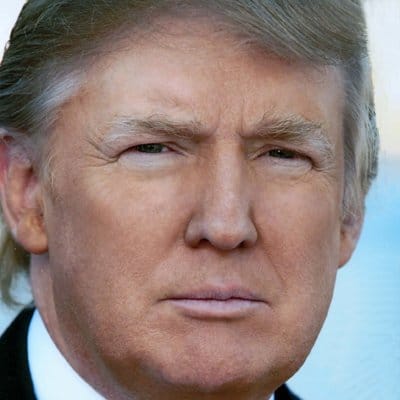
Hyperbolic grandstanding? Arguably so. That being said, since early-March, just after the initiation of Trump's war of choice on Iran, many collapse-aware individuals (who aren't easily fooled by calm periods before a storm) have been cognizant of the strong possibility that, due to energy constraints and knock-on effects from shortages of helium, sulphur and fertilizers, compounded more recently with the possibility of the AI bubble popping and the impending El Niño, the world may not simply be plunged into a recession but an outright depression.
Could Trump – having found himself in a quagmire of his own making that he can't get out of – be settling for setting up the Democrats for taking the fall for a possible economic depression, while simultaneously forcing Democrats to take the fall for the inevitably disastrous exit from his war of choice on Iran (in a similar manner to how he previously foisted the disastrous exit from Afghanistan on to Democrats)? Although certainly possible, it's not as if Trump's ever needed an excuse to blame his many (many) shortcomings on someone other than himself (previous US president Joe Biden possibly being his favourite whipping boy).
So although hoping for a loss so that he can pass the buck onto the next sucker is theoretically possible, the fact that Trump thrives in chaos would seem to suggest that he'd have no need to shift the blame, largely because he'd be more than capable – and happy – to counterfeit the buck, so to speak. It's more likely then that Trump and his cronies would favour the tried and tested alternative tract of spreading lies and sowing doubt in the electoral system, and with Trump and his cronies having spent the better part of two years dismantling various governmental systems while throwing everything at the wall to see what sticks, one of the earliest forms of election meddling they've partaken in has been to preemptively "fix" the election outcomes.
Voter suppression
There is of course reams of precedent, going back decades, when it comes to American elections clandestinely won via voter suppression. Contrary to accepted wisdom, and supposing that certain individuals are to be believed, then those reams may very well include the 2024 presidential election. No, that isn't a reference to the cockamamie claims that Elon Musk stole the election with his SpaceX satellites, but rather that, according to investigative reporter Greg Palast (who has some history with these things), key states suppressed votes by partaking in the as-American-as-apple-pie Jim Crow tradition of restricting Black Americans from voting (which we're not going to elaborate on here). Fast forward two years and Palast has been ringing a similar bell, repeatedly writing about the vote suppression of Black Americans in Texas.
Although Palast's writings no longer garner the mainstream coverage they did more than two decades ago, at the forefront of what has been garnering mainstream coverage vote suppression-wise are the multitude of lawsuits filed in nearly every state by the Justice Department in the attempt of restricting mail voting, the attempt to make anti-terrorism funds for state and local governments contingent on how elections are administered, threats to withhold federal election funding from states that failed to acquiesce to changes to voter registration forms, and finally the attempt to pass the SAVE Act, a bill that would have purged legal voters from voting rolls in all 50 states. All of which were rejected by the courts or, as in the lattermost case, failed to pass after languishing in the Senate for several months.
Nonetheless, although all of the above failed to pass muster (the Department of Justice also lost all 26 cases in district courts in its attempt to obtain detailed voter records from different states), the stage has theoretically been set for Trump to claim that "had of these lawsuits been won, we would have won the election". Tactically speaking, the initial loss of lawsuits may not mean that crisis has been averted.
Threats to legitimacy
For the past few months widely respected polls have been showing Trump's approval rating hitting ever-lower records, a recent Reuters/Ipsos poll coming in at a dismal 31%. Meanwhile, and as should come as a surprise to no one, in a recent interview with The Washington Examiner Trump claimed that polls showing his approval ratings in the thirties were "fake", that his support is closer to 60%, and that "I don't believe I could be beaten by anybody". All of which is certain to lead to an array of problems once voting results start coming in, and not just because this election cycle has more election deniers in positions of power over election administration than ever before.
Case in point, when Trump was asked in October if he'd accept the results of the election regardless of who won, his response was "What do you think? Of course I will, but we don't want cheating."

Q: Are you committed to accepting the results of the midterms, no matter what party wins?
Trump: What do you think? Of course I will.
But we don't want cheating. We don't want cheating. We don't want cheating. Do you understand me?
The implication of Trump's response (and similar claims by those such as House Speaker Mike Johnson) is that Democrats, never-Trumpers, and other aligned groups have no choice but to expect any number of election meddling claims to be brought up by Trump and his cronies following the completion of voting, forcing them to diligently prepare themselves to counter any such claims.
Large amounts of pretext have been seeded by Trump and company over the past several months that could later be used as "evidence" of cheating, just one instance that opposition leaders have been forced to prepare for is the claim of foreign meddling. As Trump stated back in July during a primetime address,
Tonight, I'm announcing the immediate declassification and release of critical intelligence, revealing shocking vulnerabilities in our election infrastructure. This evidence shows that the election system we have dangerously exposes and really exposes, like levels never thought possible, to hacking, exploitation, and foreign interference.
[...]
Also, in mid-2018, China was working to influence the results of the US midterm elections and later the results of the 2020 presidential election itself.
To little surprise no evidence of Trump's claims has ever been provided, which of course wouldn't stop Trump from attempting to order the seizure of voting machines in order to determine how they were supposedly accessed by foreign actors. That being so, and were claims of foreign meddling to be made, the inane absurdity of it all is that the Trump administration itself gutted the Cybersecurity and Infrastructure Security Agency in early-2025, the very body that partners with states on election security. Specifically, Elon Musk's Department of Government Efficiency (DOGE) fired more than 100 workers, while placing another 600 on administration leave.
On and on go the concocted reasons to cast doubt on the midterms and their legitimacy, paving the way for a fractious two months that could very well lead to some unneeded outbreaks of violence in the United States of Armaments.
From the Iran war to a (possibly) chaotic United States
Although voting ends today, November 3rd, that only means that the counting of votes has now begun, which is, to be clear, when the real challenges begin and when the real possibilities of political violence commence. Because once counting starts is when the process of determining real political power comes into play and is when the dangers to democracy really come to fore, and that's without taking into account the 100m Americans said to support the use of political violence at home.
Putting aside the tragic human casualties, it hardly needs to be said that Trump's war of choice on Iran has been a complete disaster, raising the prices of not just gasoline and diesel while exacerbating a cost-of-living crisis, but simultaneously kicking off what is likely to be the beginning of the end of American hegemony. It's anybody's guess as to where things go next with the war, but whether it be Iran or the United States (or a third actor) that ignites the next round of retaliatory strikes, the fact remains that Trump has nothing to lose but rather plenty of incentive for sowing chaos in Iran (or as part of the wider war), a situation that could very well provide the conditions necessary for Trump to maintain power in light of election losses.
As you may recall, Trump didn't rule out the possibility of invoking the Insurrection Act during an October 1st interview with Time magazine.
TIME: Would you rule out declaring a state of emergency in the lead up to the midterms unless there's widespread violence in the streets?
TRUMP: I don't rule anything out or in. We'll see. You mean the Insurrection Act?
TIME: Yeah.
TRUMP: No, I've never used it. I could use it. A lot of people think I should use it sometimes.
As stated earlier, it's extremely unlikely that Trump would favour passing the buck of the disastrous Iran war onto the next sucker, for the simple fact that his mercurial nature thrives on chaos and because his belief structure facilitates the impression that he fares better in chaotic situations than anybody else. Moreover, genuine international chaos or a chaotic emergency that occurs as a result of a renewed breakout in the Iran war, combined with domestic anti-war and anti-ICE protests, could very well provide Trump with the cover for unleashing political violence by the state and for justifying the enactment of emergency powers like the Insurrection Act, ultimately allowing for reason to delay and even contest election counts.
It also shouldn't be forgotten that on September 30th Trump summoned roughly 800 generals and admirals to the Marine Corps Base Quantico in Virginia where he told them to be ready to turn the armed forces inwards against an unspecified "enemy from within" and to ward off an "invasion from within", while also singling out Democratic-led cities (San Francisco, Chicago, New York and Los Angeles) as being "very unsafe places", that "we're going to straighten them out one by one", and that they'd be "going into Chicago very soon", all of which would be "training grounds" for the military.

Trump has taken actions against Ukraine two weeks before the election that are wildly unpopular with both the public and Congress. This suggests that he simply doesn’t care about the elections and is laying groundwork for actions between now and January 3.
While the courts mentioned earlier stymied all of Trump's preparatory stages for partaking in election manipulation, it'd probably be folly to count on them in a scenario as described just above. Because as seen in several cases over recent decades, the US Supreme Court and other federal courts have generally allowed for international war emergencies to behave as a sort of get out of jail free card. When objections were raised to the forcible relocation and incarceration of more than a hundred thousand people of Japanese descent (the majority of whom were US citizens) during WWII, the Supreme Court deferred to the executive and said they'd wait until after the war to adjudicate the case. The same could only be expected to happen were Trump attempt to pull off a manoeuvre as such.
Mr. Veto
Putting aside the above scenario, and supposing that not only does Trump fail in all his attempts to cast doubt on the midterms and their legitimacy but that Democrats successfully take control of both the House and the Senate, there's still the possibility that Trump simply defers to ruling by executive order like a dictator. And not only is there precedent for that, but it's also what he's effectively stated.
In a rare acknowledgement by Trump that Republicans may lose the midterm elections, made during a November 1st interview with the New York Post's Pod Force One podcast, Trump conceded that he may very well have to become "Mr. Veto".

"I guess I'll become Mr. Veto."
President Trump lays out his strategy for dealing with a potential Democratic-controlled Congress in an exclusive interview with Miranda Devine.
Trump says he would veto legislation before eventually negotiating compromises, while expressing hope Republicans maintain control after Tuesday's midterms.
According to Reuters, the Trump administration has spent months laying the groundwork for a possible Democratic takeover of both the House and the Senate and how they can continue to advance major parts of his agenda. In short, Stephen Miller (deputy chief of staff for policy), Russell Vought (director of the office of management and budget) and White House lawyers have been concocting a plan of how to bypass lawmakers entirely, including seeking ways in which grant rules could be changed so that political appointees could be given more say over who gets federal money.
Technically speaking, Democratic control of the House and Senate would mean Democrats could block Trump's judicial and executive-branch nominees, including any Supreme Court pick, while also being able to refuse the passage of Trump-backed legislation. In return, and essentially underlining why Trump stated to Pod Force One that he and Democrats would have to "probably make deals", Trump could simply veto Democratic legislation he disliked, which Democrats likely couldn't override.
Which may very well all be rather pointless to even speak about, considering that that's essentially how Trump has governed for the past 21 months and which essentially make the results of the midterms somewhat moot. Because if we look back and remember what's occurred since January 2025, we can see how the legislature is no longer an effective check on presidential power. Although Republicans have held both the House and the Senate since Trump's second inauguration, Trump has nonetheless spent his time bypassing and sidelining them, including:
- capture of Venezuelan President Nicolás Maduro, done via commander-in-chief powers
- Iran strikes, conducted without congressional authorization
- tariffs, imposed with emergency declarations rather than through Congress
- DOGE, a governmental department created without any legislation
- renovation of the White House ballroom, which skipped congressional spending authority
Trump has so far signed nearly 300 executive orders during his second term, including 142 in his first 100 days, beating FDR's 99.
All in all, with the best case scenario of Democrats winning both the House and the Senate, coupled with no ensuing political violence, the fact remains that an unhinged president will continue to rue the day, one who can gambol around with his contempt for the guardrails of democracy and, as a lame duck (supposing he doesn't try for that third term), has arguably nothing left to lose.
Or perhaps Trump's talk about being "Mr. Veto" is simply an attempt to get Democrats and the like to let down their guard while he and the rest of his cronies (Stephen Miller, Steve Bannon, Elon Musk, Russell Vought, Peter Navarro, Howard Lutnick, Pete Hoekstra, etc.) do what's needed to subvert the election process. Either way, we'll soon find out.
The... resistance?
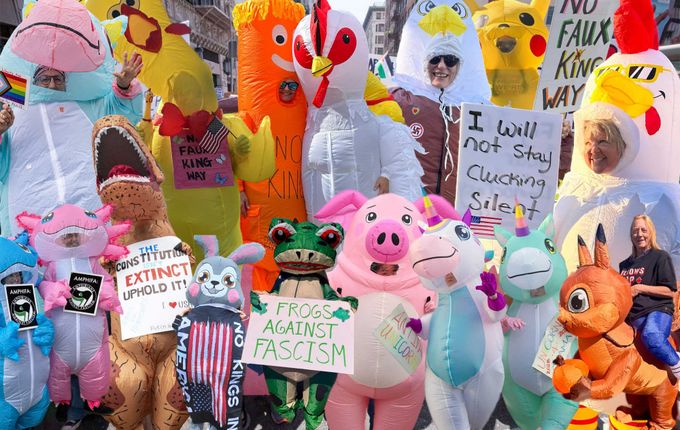
So what exactly is it that ordinary Americans are doing to resist Trump, other than filling out a voting form and dressing up in inflatable frog costumes for two, maybe three hours once every six months? Or put a bit differently, how is it that we non-Americans should lower our expectations in lieu of the dumb shit they might be expected to do?
Well, in an insightful Atlantic piece by architect V. Patrick Poch, a naturalised American citizen who escaped Communist Czechoslovakia for the United States and whose adopted homeland now reminds him of the place he fled, it's stated that "What worries me the most is not Trump himself or those who do his bidding, but rather the willingness of so many ordinary citizens to look away."
Poch, however, appears to have got it wrong in this specific observation. Because in this new age of constant online and offline stimulation in which the constant drip of dopamine is more akin to the soma in Aldous Huxley's Brave New World than the double-speak and thought police of George Orwell's 1984, the fear shouldn't be that ordinary Americans quietly "look away", but rather that they rambunctiously look on. Not necessarily at videos of atrocities fed into their social media feeds, but rather at those like the aforementioned late-night comedians, court jesters who duplicitously sell their audiences a false bill of goods in order to bask in some of the limelight reflected off the orange Cheeto, convincing those audiences that a valid response to growing authoritarianism is to laugh at their own demise while effectively affirming the belief that the most-responsible and right-thinking citizen is one who does little more than jack themselves up on the right kinds of soma and partakes in the correct kind of performative rituals (which in this day and age means such things as clapping at the right jokes and dancing around in inflatable frog costumes).
That all being so, probably no clip in the entire history of late-night comedy exemplifies the sheer mendacity of American "popular culture" more so than comedian Jon Stewart's opening segment to the first episode of The Daily Show following Trump's re-election to office in late-2024, one in which Stewart reveals the utter stupidity ingrained in the craniums of his audience members who dutifully laugh at the – let's just say it out loud here – patheticness of their sad lives, all the while effectively making a complete mockery of those like Poch (and even more so his late father), people who still hold some sanctity when it comes to actually standing up against atrocious oppression rather than making a pathetic and self-serving spectacle out of it all.
If that's the United States, and if those are Americans, what a sad and pathetic country, and what a sad and pathetic people.
To repeat David Cochrane's observation relayed at the very beginning of this piece, "America isn't the way it is because he's president. He's president because America is the way it is."
Gird those Canadian loins
As should be becoming more and more apparent to non-Americans around the world, the ability for Americans to not just resist Trump but overcome his dismantling of their country's democratic norms and the like appears to be all but non-existent, if not an outright joke. Which would be bad enough in its own right. But what's possibly of even greater concern to all those non-Americans is that this dismantling of democratic norms by Trump and his ilk isn't just isolated to the United States, but is being actively exported to, and imposed upon, other parts of the world as well.
Moreover, even when the actions of Trump and his cronies – such as them preparing the stage for election meddling via claims of foreign interference – are decried by Democrats and the like, those detractors overwhelmingly speak about the (supposed) meddling by authoritarian countries like China and Russia, but rarely speak about the false campaigns of (supposed) election interference levelled against democratic countries like Canada.
Because yes, for all you unaware non-Canadian non-Americans out there, following all sorts of nonsensical claims levelled against Canada since early-2025 (fentanyl being trafficked from Canada, immigrants sneaking into the country over a "weak" Canadian border, wildfire smoke not being properly addressed, and more), Trump and his cronies have, for several weeks now, been waging an official – and false – campaign claiming that Canadians have been trying to meddle in the United States' midterm elections. Which includes the much-derided-in-Canada US ambassador unsurprisingly suggesting that were Trump to lose the midterms it could very well be Canada's fault.
That of course all comes in light of Trump himself having spent years endorsing foreign candidates (such as Hungary's Viktor Orban), and even though Trump and his cronies have spent 2026 colluding with Alberta and Quebec separatists to break up Canada. As absurd as the whole situation is, the Canadian government were all but forced to direct its diplomats in the US to stay away from midterm election candidates and keep a low profile in order to stymie fake allegations of political interference.
Could, in the coming days and weeks, the brunt of the blame for Republican losses be levelled against Canada, which could very well provide the pretext for some kind of nefarious actions taken upon not only Trump detractors but upon Canadians as well? It's of course impossible to say, but either way we'll soon find out.
But what we nonetheless can say is that while ordinary Americans who oppose Trump have had little to say about the false allegations levelled against democratic Canada (to be fair former president Barack Obama did at least recently push back against Trump's tariff war with Canada and described Canadians as "the nicest people"), it's getting harder and harder for those such as Canadians to distinguish between the "good" Americans and the "bad" Americans when a significant amount of them (a majority of them?) seem to care about little else besides their constant drip feed of dopamine/soma.
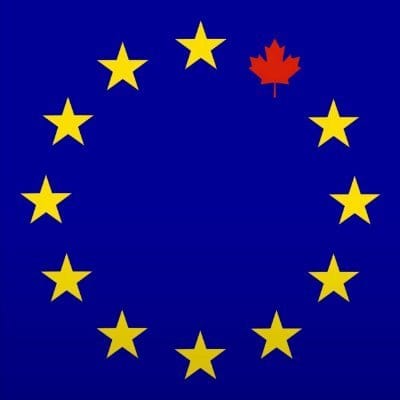
It wasn't...
❌ Concentration camps
❌ Women/kids raped in camps
❌ Dead fishermen in Latin America
❌ Dead school girls in Iran
❌ Alex Pretti or Renee Good
❌ Threats to allies
❌ Pedophilia
...that turned the polls against Trump. It was expensive gas. Never EVER forget that!
To make a long story short, what probably needs to be understood (particularly by those non-Americans interested in maintaining democratic structures) is that, if current events are any indication, any change to the current (American) status (of the demolition of democratic norms) can't be expected to emerge in the United States itself anytime soon.
Suffice to say, the implications of that should be lost on no one.













Comments